Vocation religieuse
Les liaisons dangereusesVocation religieuse is presented in Les Liaisons dangereuses not as an uncomplicated escape from society, but as a choice whose freedom and motives are difficult for others to judge. Through Cécile Volanges’s decision to enter a convent, the novel sets religious calling against convent education, arranged marriage, compromised personal agency, and the family’s obligation to respect a choice it cannot fully explain.
Convent Education and Social Expectation
The idea of religious life is present from the novel’s framing onward. Its preface mocks the claim that the events could belong to the enlightened present, arguing that no young woman with sixty thousand livres of income would become a nun. That skeptical assertion makes the later prospect of Cécile’s religious vocation part of the work’s challenge to complacent expectations about wealth, conduct, and what women will choose.
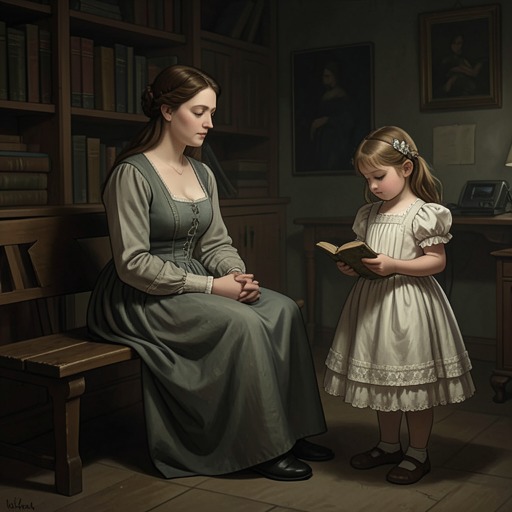
Convent education also carries a social meaning distinct from becoming a nun. The Marquise de Merteuil treats Cécile’s years in the convent as an advantage in the marriage market: she argues that the Comte de Gercourt favors convent-educated brides and expects restraint from blondes. Merteuil proposes exploiting those expectations to make him ridiculous. The convent therefore appears first as an institution that shapes a young woman for a socially arranged future, not necessarily as preparation for religious commitment.
Choice, Marriage, and Maternal Responsibility
Madame de Volanges’s thinking about Cécile’s marriage shifts when she considers her daughter’s attachment to the Chevalier Danceny. She had regarded the proposed match with the Comte de Gercourt as a responsible choice, but comes to fear that imposing it would set Cécile between wrongdoing and unhappiness. She resolves not to force her daughter to marry one man while loving another, and is prepared to withdraw her promise to Gercourt rather than risk her daughter’s virtue and future happiness.
Her reasoning also challenges marriage based chiefly on advantage. Gercourt may be the more advantageous match, she acknowledges, but Danceny is of equally good family, possesses personal qualities she respects, and loves Cécile in return. Cécile’s wealth could support a life with him rather than require her to be governed by fortune. Madame de Volanges therefore sees delay and reconsideration as preferable to treating marriage as a calculation detached from the couple’s inclinations and characters.
Agency Under Pressure
The novel complicates any simple reading of Cécile’s later religious choice as a fully transparent expression of settled conviction. Earlier, she refuses a plan to make a duplicate of her bedroom key, fearing discovery and lasting disgrace; she also says the plan feels wrong and admits that she cannot bring herself to take the original key. Her refusal demonstrates a capacity to recognize danger and set a limit, even within the restricted circumstances of her secret correspondence with Danceny.
That limit is later overridden by the Vicomte de Valmont, who obtains the key through Cécile’s compliance after pressure has been brought to bear on her. He describes her distress and fear, and presents her eventual submission as a victory. His account exposes the gap between a libertine’s language of conquest and another person’s freedom to refuse. This history matters to the question of vocation: a decision to withdraw from worldly relationships follows experiences in which Cécile’s choices and boundaries have not been reliably respected.
The Vocation and Its Uncertain Motives
When Madame de Volanges asks Madame de Rosemonde for counsel, Rosemonde urges her not to oppose Cécile’s apparent vocation. She distinguishes between forcing religious life on someone who does not feel called and allowing it when the person appears to choose it; in this case, she advises encouraging Cécile’s plan, leaving her at the convent, and breaking off the arranged marriage. Her recommendation rests partly on the principle that the young woman’s choice should not be overruled merely because its reasons are painful or unknown to her mother.
Madame de Volanges nevertheless considers other explanations. In retrospect, she wonders whether Cécile’s distress at news of Valmont’s misfortune arose from concern for Danceny, and whether her tears after the revelations about Merteuil reflected jealousy or grief over an unfaithful lover rather than simple friendship. She also fears that a sense of being wronged by men may have been mistaken for a religious call. These are her doubts, not established explanations: Cécile’s actual motives remain undisclosed, and Rosemonde explicitly counsels against assuming that outside observers can settle the question.
Postulancy and Narrative Significance
The outcome shown is Cécile’s entry into postulancy, not a confirmed final profession. Madame de Volanges reports that her daughter is to take the postulant’s habit, while also acknowledging that she proceeds in part because Rosemonde has remained silent about the events behind her advice. Her decision is thus marked by maternal grief as well as respect for her daughter’s stated choice. Meanwhile, the Chevalier Danceny has left Paris and is said to be going to Malta, closing off the possibility that Madame de Volanges might readily repair the situation through marriage.
Religious vocation remains deliberately unsettled: it may be a sincere calling, a refuge from painful experience, or a choice formed under pressures that the family cannot fully reconstruct. The contrast between the preface’s disbelief that a wealthy girl would become a nun and the final postulancy turns that skepticism into a measure of the story’s consequences. The convent is at once a site of female education, a social alternative to marriage, and the destination Cécile chooses when the people around her cannot offer certainty about what she has endured or what she wants next.